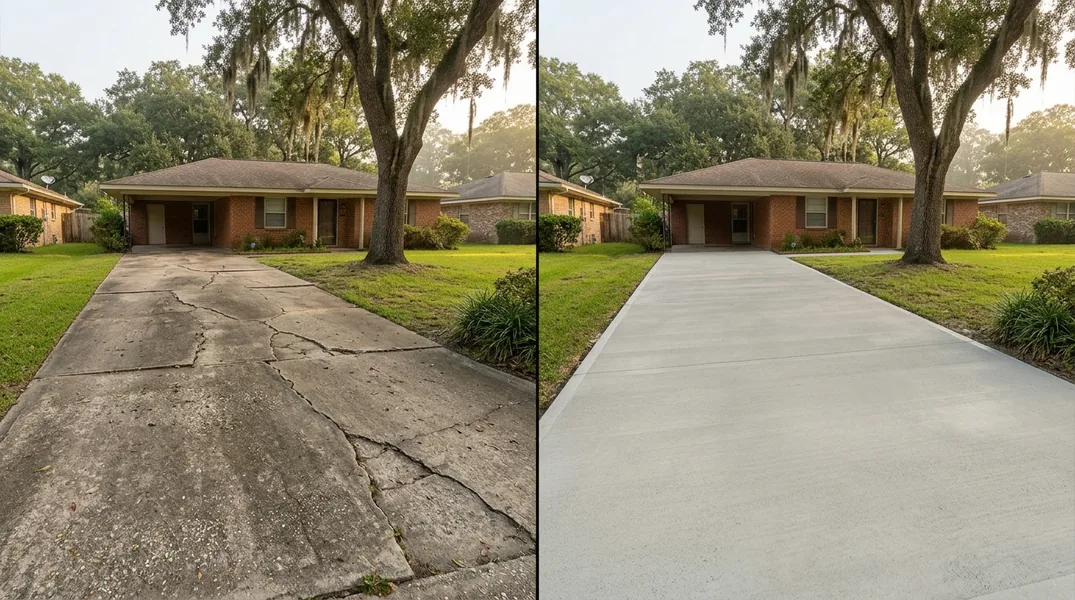
Understanding Baton Rouge's Climate and Concrete Curing
If you're planning a Concrete Driveways project in Baton Rouge, you need to understand how our unique Louisiana climate affects concrete curing. Unlike homeowners in drier climates, residents here face a combination of high humidity, intense heat, and unpredictable rainfall that directly impact how concrete sets and hardens. The curing process is critical because it determines the strength and longevity of your finished concrete surface.
Concrete doesn't simply dry like paint. Instead, it undergoes a chemical reaction called hydration, where the cement in the mix bonds with water to create a solid structure. This process is sensitive to temperature, moisture, and humidity levels. In Baton Rouge, our subtropical climate means we deal with moisture-laden air year-round, which can either speed up or slow down curing depending on conditions. Understanding these variables helps you choose the optimal window for pouring concrete and ensures your investment stands the test of time.
Spring (March to May): Often the Ideal Pouring Season
Spring is generally considered the best time to pour concrete in Baton Rouge. During March through May, temperatures are moderate, typically ranging from 60 to 80 degrees Fahrenheit. These conditions are nearly perfect for concrete hydration. The concrete cures at a steady, predictable rate without the extreme heat that can cause rapid moisture loss and cracking. Spring also tends to have more stable weather patterns compared to summer and fall, reducing the risk of unexpected heavy rains that could compromise a freshly poured slab.
Another advantage of spring pouring is that you avoid the peak summer heat. When temperatures soar above 85 degrees, concrete can cure too quickly on the surface while the interior remains soft, leading to surface cracking and reduced overall strength. Spring conditions allow the entire concrete mass to cure uniformly. If you're planning Concrete Patios or other decorative work, spring also gives you excellent visibility of the finished product before the intense summer sun makes outdoor work uncomfortable.
Summer (June to August): Possible But Challenging
Summer in Baton Rouge brings heat, humidity, and afternoon thunderstorms, all of which complicate concrete pouring. Temperatures regularly exceed 90 degrees, and the combination of heat and high humidity creates difficult curing conditions. The intense heat accelerates surface curing while trapping moisture underneath, which can lead to blistering, scaling, and reduced durability. Additionally, the frequent afternoon thunderstorms can saturate freshly poured concrete or wash away the top layer if timing is poor.
That said, summer pouring is not impossible if you take extra precautions. A professional Baton Rouge Concrete contractor can manage summer pours by using cooling additives, controlling moisture with proper curing blankets, and scheduling work during cooler morning hours. However, these additional measures typically increase project costs and complexity. If you must pour concrete during summer, expect to pay more for specialized techniques and have a detailed weather contingency plan in place.
Fall (September to November): A Secondary Window
Fall offers a secondary opportunity for concrete pouring in Baton Rouge. September and early October can still be warm and humid, but by late October and November, temperatures begin to cool. This transition period can work well for concrete projects, particularly in November when conditions start to resemble spring. However, fall does come with the risk of tropical weather systems and hurricanes, which can disrupt schedules and introduce excessive moisture into freshly poured concrete.
If you're considering a fall pour, plan conservatively and maintain close communication with your contractor about weather forecasts. Late fall (November) tends to be more reliable than early fall, as hurricane season peaks in September and October. For Stamped & Decorative Concrete projects that require precision and specific finishing techniques, fall can work well once you reach November, when conditions stabilize.
Winter (December to February): Slower Curing but Manageable
Winter in Baton Rouge is mild compared to northern regions, with temperatures typically ranging from 40 to 65 degrees. While concrete can cure in cooler temperatures, the process slows considerably. Cold concrete hydrates more slowly, which means your project timeline extends. Additionally, winter brings higher rainfall, and the combination of cool temperatures and moisture can create conditions where concrete takes weeks rather than days to reach usable strength.
Winter pouring is generally recommended only when you have flexibility in your schedule and don't need the concrete to cure quickly. The advantage is that fewer contractors are scheduling work during winter, so you may find better availability and potentially more competitive pricing. If you do pour in winter, ensure proper drainage around the site to prevent water pooling, and plan for extended curing time before allowing heavy traffic or loads on the concrete.
Curing Concrete in Humidity: Best Practices for Success
Regardless of which season you choose, managing humidity during the curing process is essential in Baton Rouge. High humidity slows surface evaporation, which can actually be beneficial in preventing surface cracking, but it also extends overall curing time. Professional contractors use moisture barriers, curing compounds, and sometimes tarps to control the curing environment. Keeping the concrete moist for the first seven days after pouring is critical, as this is when most of the strength develops.
Proper curing in our humid climate means avoiding the temptation to rush the process. Even if your concrete appears hard after a few days, it hasn't reached full strength. Most concrete needs at least 28 days to cure completely, and in humid conditions, this timeline should be respected. If you're planning Concrete Repair & Resurfacing work or need to know more about protecting your existing concrete, our team at Baton Rouge Concrete can provide guidance tailored to our local climate.
Planning Your Project: When to Call a Professional Contractor
The best time to pour concrete depends on your specific project needs, timeline, and local weather patterns. Rather than guessing, consult with an experienced contractor who understands Louisiana's climate challenges. Baton Rouge Concrete has years of experience scheduling projects during optimal windows and managing the unique challenges our humidity presents. We can assess your site conditions, review your timeline, and recommend the best season for your project to ensure maximum durability and quality.
If you're ready to discuss your concrete project, don't wait for the perfect season to reach out. Contact us today at (225) 267-8334 or request a free estimate to learn how we can help. Whether you need a new driveway, patio, or decorative concrete work, our team will guide you through the planning process and ensure your project is scheduled for success.
Looking for a professional concrete contractor in Baton Rouge? Baton Rouge Concrete responds fast for all your concrete needs.
Get a Free QuoteOur services: Concrete Driveways · Concrete Patios · Stamped & Decorative Concrete