Understanding New Construction Slabs in Baton Rouge
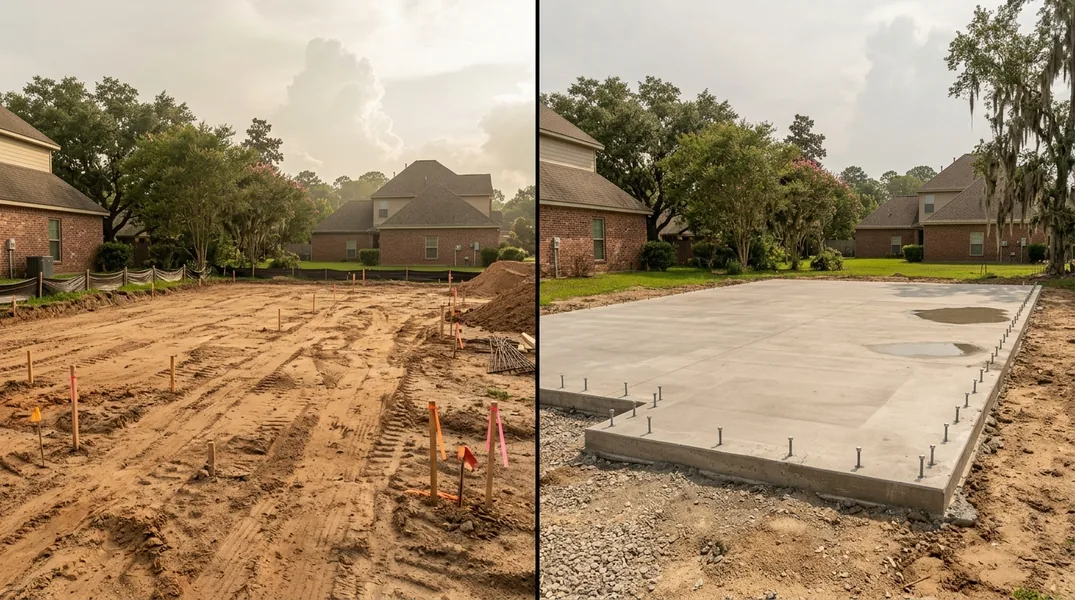
If you're buying a new home in Baton Rouge, chances are your foundation will be a concrete slab. Unlike older homes with basements or crawl spaces, modern construction in Louisiana typically uses slab-on-grade foundations, where concrete is poured directly onto prepared ground. This approach is cost-effective and works well for our region's climate, but it comes with specific considerations that every homebuyer should understand before closing.
A slab-on-grade foundation consists of a concrete pad, usually 4 to 6 inches thick, that sits on a prepared base of soil and gravel. The concrete is reinforced with rebar or wire mesh to handle stress and movement. In Baton Rouge, where humidity and moisture are constant concerns, the quality of this slab can significantly impact your home's longevity. Understanding how these foundations are constructed and what can go wrong will help you make an informed decision about your investment.
Why Clay Soil Matters: The Louisiana Foundation Challenge
The greater Baton Rouge area sits on expansive clay soil, which presents unique challenges for concrete foundations. Clay expands when wet and shrinks when dry, creating movement beneath your slab. This natural cycle can cause cracking, uneven settling, and structural stress over time. During Louisiana's rainy seasons, clay soil absorbs moisture and swells; during dry periods, it contracts. These cycles place constant pressure on your concrete slab, which is why proper site preparation and drainage are absolutely critical.
Before any concrete is poured, the soil must be properly compacted and stabilized. Builders should remove organic material, grade the lot for drainage, and install a moisture barrier beneath the slab. If these steps are skipped or done poorly, you may face foundation problems within just a few years. Cracks in your slab can allow moisture to seep into your home, leading to mold, basement flooding, and structural damage. This is why a thorough foundation inspection before closing is not optional, it's essential.
What to Look for During Your New Home Foundation Inspection
A professional new home foundation inspection in Louisiana should examine several key areas. Start by walking the perimeter of the slab and looking for visible cracks, particularly large ones (wider than 1/8 inch) or those that run diagonally. Small hairline cracks are common and usually not concerning, but wider or growing cracks suggest underlying movement or poor concrete quality. Check the interior floors as well, especially in kitchens and bathrooms where moisture is highest. Look for cracks, uneven surfaces, or doors and windows that stick, all signs that the foundation may be settling unevenly.
Inspect the grading and drainage around your home. Soil should slope away from the foundation at least 6 inches over 10 feet to prevent water from pooling against the slab. Check for standing water, erosion, or areas where water runs toward the house. Ask the builder or inspector about the moisture barrier beneath the slab, the compaction methods used, and the soil type. Request documentation of site preparation and concrete testing. Don't hesitate to hire an independent structural engineer if you have concerns, the cost of an inspection now is minimal compared to foundation repairs later.
Common New Construction Slab Problems and Red Flags
Several issues commonly appear in new construction slabs, especially in Louisiana's climate. Differential settling occurs when one part of the slab sinks more than another, causing floors to slope and cracks to form. This is often caused by inadequate soil preparation or clay soil movement. Concrete spalling, where the surface flakes or deteriorates, can result from poor concrete mix design, improper curing, or exposure to freeze-thaw cycles (rare in Baton Rouge but possible). Moisture intrusion is perhaps the most common issue in our region, manifesting as damp basements, efflorescence (white powder on concrete), or mold growth.
Another red flag is if the builder used concrete with poor air entrainment or improper water-cement ratio. Low-quality concrete breaks down faster and absorbs more moisture. If you notice cracks appearing within the first year, or if the builder seems dismissive about foundation concerns, take that seriously. Some builders offer limited warranties on slabs, typically one to two years, so any issues discovered during this window should be documented and addressed immediately. Request a copy of the concrete testing reports and the builder's warranty documentation before closing.
Steps to Take Before Closing on Your New Build
Before you sign on the dotted line, schedule a professional new home foundation inspection. This should be done by someone independent of the builder, ideally a licensed structural engineer or home inspector certified in foundation evaluation. Walk through the home with the inspector and ask questions about any cracks, drainage issues, or concerns they identify. Request written documentation of all findings. If problems are found, get repair estimates and negotiate with the builder to fix them before closing or provide credits for repairs.
Review all documentation provided by the builder, including concrete test results, soil reports, and warranty information. Understand exactly what the foundation warranty covers and for how long. Ask the builder about their site preparation process, the concrete supplier, and any issues that arose during construction. Request copies of any change orders or modifications to the original foundation plan. If you're buying in Baton Rouge and the lot has unusual topography or drainage challenges, ask specifically how these were addressed. Don't accept vague answers, get specifics in writing.
Long-Term Maintenance and When to Call a Professional
Once you've closed on your new home, proper maintenance helps preserve your slab. Keep gutters clean and ensure downspouts direct water away from the foundation. Maintain consistent soil moisture around your home, especially during dry seasons, as extreme fluctuations accelerate clay soil movement. Monitor your slab regularly for new cracks or changes in existing ones. Take photos and measurements of any cracks you notice, tracking them over time. If cracks grow or new ones appear, this could indicate ongoing foundation movement that needs professional evaluation.
If you notice significant cracking, uneven floors, or moisture problems, contact a concrete specialist. Concrete Repair & Resurfacing professionals can assess whether your slab needs sealing, injection repair, or more extensive work. For a free estimate on foundation concerns or to schedule an inspection, reach out to Baton Rouge Concrete at (225) 267-8334. Addressing problems early prevents them from becoming expensive structural issues. Your foundation is the most important part of your home, and in Louisiana's unique climate, it deserves careful attention and professional care.
Looking for a professional concrete contractor in Baton Rouge? Baton Rouge Concrete responds fast for all your concrete needs.
Get a Free QuoteOur services: Concrete Driveways · Concrete Patios · Stamped & Decorative Concrete